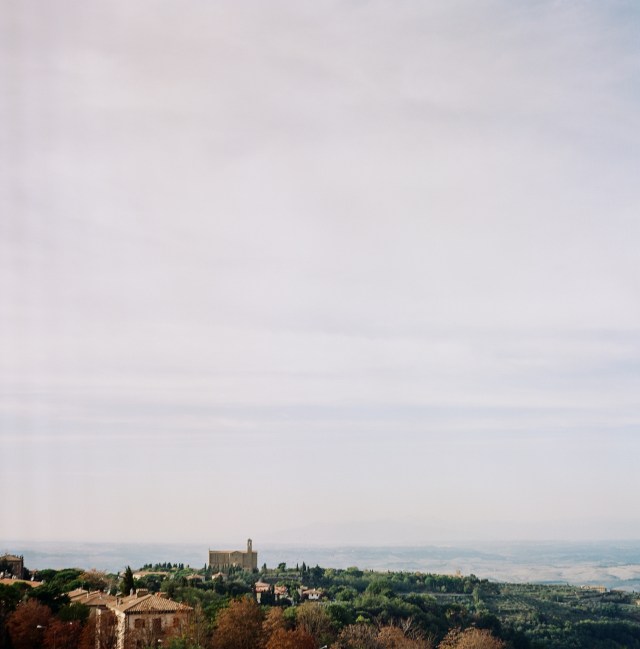
With our eyes pointed west over vines of sangiovese and colorino, we have seen the sun trace lower and lower in the sky. This we notice but have not troubled ourselves too much to process. Too good is the wine and food and company. But some sense of obligation or exploration prevails, and onward we shall go. It is late afternoon by the time we head to Volterra. Our estate wagon dutifully climbs 1,700 feet of switchbacks, my traveling companions rest in various states of conscious around me. We reach the city. Here the air is cool and the wind is cold, but the sun still lends warmth.
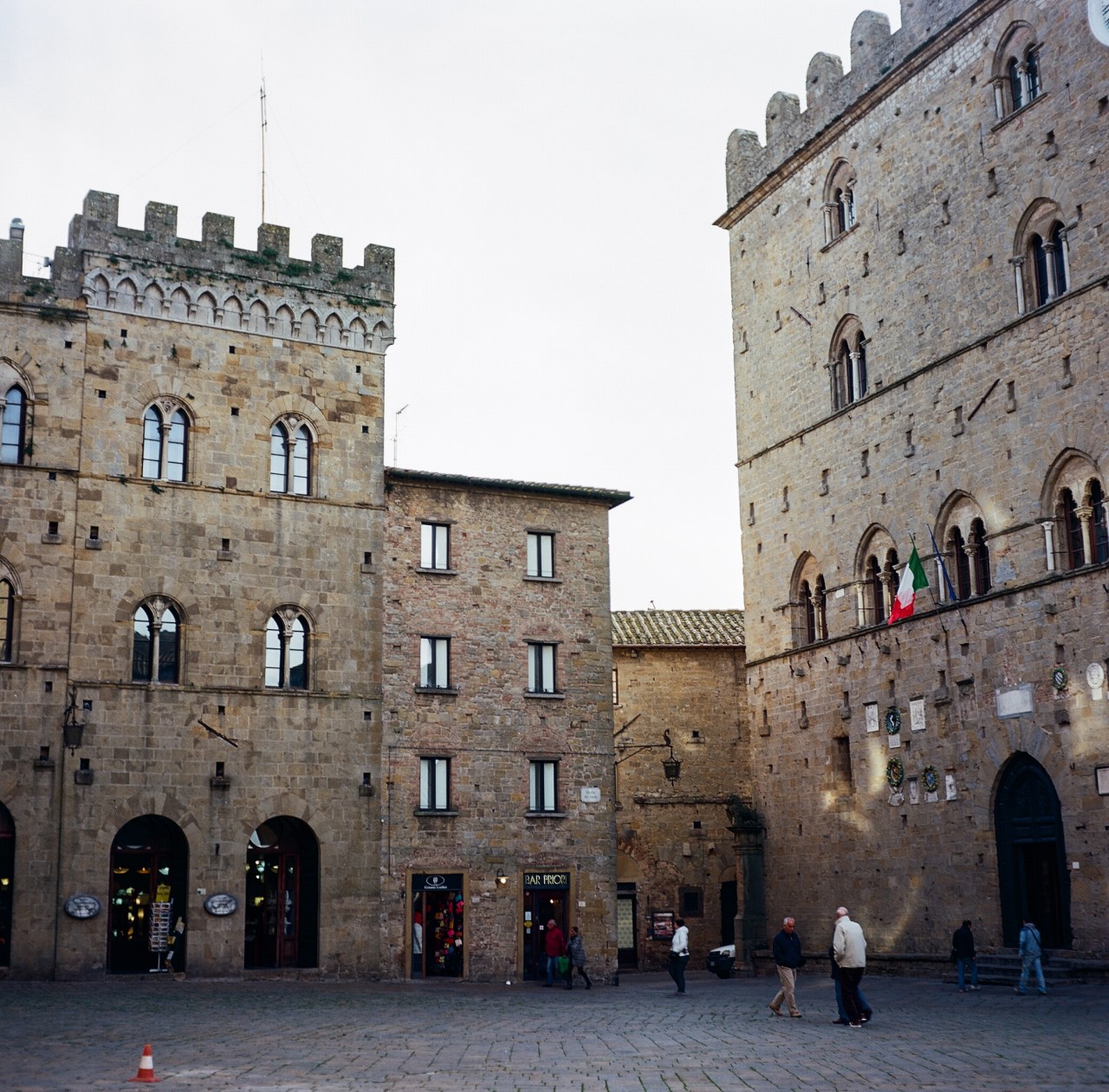
The extant Volterra is a medieval hill town like so many others. There is a cathedral and an art museum and parish churches scattered at just the right intervals. There is the main square and the government palace that looks predictably derivative of Firenze’s. But in this town, it is not. Completed in 1257, it inspired – instead of copied – the the larger Palazzo Vecchio, which was not begun until 1299.
We can trace back further too. Before this Volterra there stood the Etruscan Velathri. Nothing much of that city remains visible. What was the forum is a hilltop park, grassy and smoothly rolling; the amphitheater, ancient as it is, was built instead by the Etruscan’s Roman conquerors. So what is there then? The second floor of the tiny Etruscan museum hides l’ombra della sera, the grotesquely elongated sculpture we call the shadow of the evening. A baffling, even disturbing, reminder that much of what came before left only mystery.


 Virginia Proper